November 2, 2026
Pavement surfaces endure relentless daily wear from shifting weather patterns, heavy vehicular traffic, and persistent chemical exposures throughout their service lives. While newly laid surfaces boast a smooth texture and deep black finish, harsh environmental forces begin degrading vital binder oils almost immediately upon installation.
Many property managers and homeowners treat protective surface applications as a purely cosmetic choice meant to boost curb appeal before selling a property or hosting guests. However, viewing routine surface maintenance solely as an aesthetic luxury overlooks how rapidly asphalt binders oxidize, aggregate loosens, and moisture compromises underlying foundational sub-bases.
When preventative care shifts from a discretionary beautification project into a structural necessity, delaying action turns manageable surface fatigue into costly reconstruction. In this article, you will learn the exact tipping points where asphalt sealcoating ceases to be an optional upgrade and becomes an indispensable asset protection strategy.
When Surface Discoloration Signals Rapid Oxidation
The transition from a deep, jet-black driveway or commercial parking lot to a dull, chalky gray represents far more than superficial surface fading. Sunlight constantly bombards exposed pavement with intense ultraviolet radiation, breaking down the essential carbon bonds within the petroleum binder matrix. As the natural light oils and resins dry out over extended periods, the structural binder loses its inherent flexibility and begins to shrink. Without a resilient protective shield in place, unsealed asphalt oxidizes exponentially faster, rendering top layers brittle, rigid, and highly vulnerable to cracking under ordinary traffic loads.
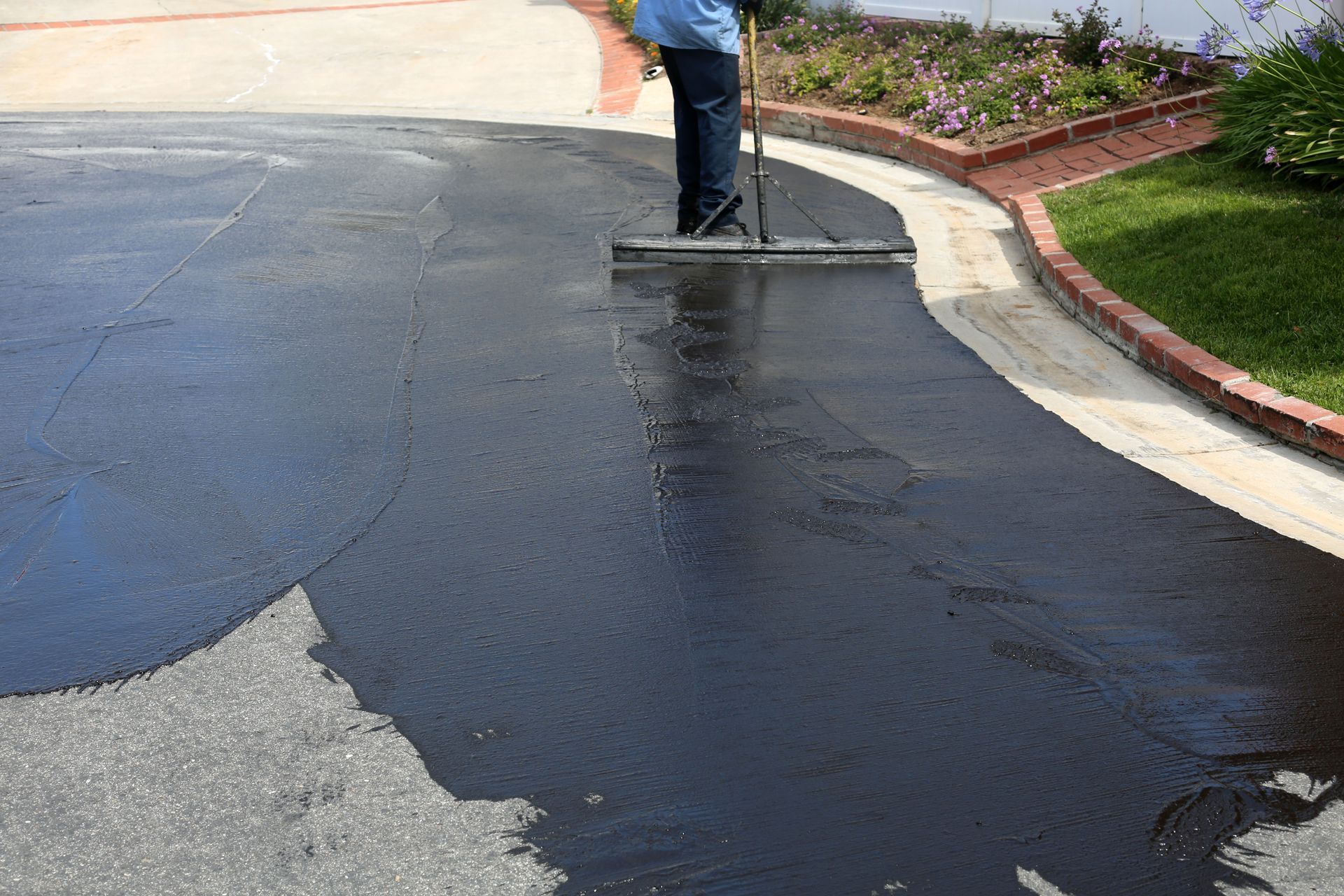
Applying timely asphalt sealcoating acts as a durable sunscreen that blocks harmful ultraviolet light while actively replenishing dark surface pigments. When pavement turns slate gray, its internal flexibility drops to critical levels where daily vehicle weight can snap the brittle surface binder. Addressing discoloration early, before fine hairline fissures spread across the site, prevents loose aggregate from detaching under tire friction and restores a deep, uniform finish across the entire property.
When Fine Surface Cracking Threatens Sub-Base Stability
Hairline surface fissures and tiny micro-fractures often appear harmless to the untrained eye, yet they mark the initial stage of progressive structural failure. Once environmental shrinkage cracks emerge, unsealed pavement allows surface water, motor oils, and automotive fluids to penetrate directly beneath the wear layer into the aggregate foundation. In regions experiencing seasonal temperature swings, trapped sub-surface moisture undergoes cyclical freeze-thaw expansion, prying minor fissures into deep structural rifts and expanding destructive voids beneath the surface.
At the onset of shallow surface cracking, applying asphalt sealcoating bridges small voids and forms an impermeable seal against destructive fluid infiltration. If these fissures exceed a quarter-inch in width, standard sealants can no longer bridge the gap alone, necessitating hot-pour crack fillers alongside full surface treatments. Treating tiny interconnected fractures early shields the compacted crushed-rock base from water saturation, saving property owners from bearing full pavement replacement expenses.
When Raveling Aggregate Exposes Underlying Structural Layers
Raveling occurs when a severely deteriorated binder allows small aggregate particles to break free from the surrounding pavement matrix. Walking across a compromised driveway often feels like treading on loose sand or coarse gravel, accompanied by distinct tire crunching sounds as vehicles maneuver across the lot. This physical shedding indicates that the top surface binder has deteriorated to a critical point where foundational stones lack adequate binding support to remain locked in place.
Loose stones continuously scatter into surrounding drainage gutters, lawn edges, and adjacent walkways, leaving behind miniature surface depressions that trap standing water. Implementing asphalt sealcoating coats exposed aggregates, binds loose fines back into the surface plane, and effectively arrests further physical erosion. Left unchecked, continuous aggregate loss rapidly thins the top structural asphalt layer, accelerating severe rutting, widespread depressions, and deep wheel path wear.
When Chemical Contamination Dissolves Petroleum Binders
Vehicular traffic inevitably deposits petroleum distillates, motor oil, power steering fluid, and radiator coolant onto busy parking bays and residential driveways. Because the asphalt binder is fundamentally a petroleum derivative, spilled automotive fluids share chemical affinities that actively dissolve the pavement matrix on contact. Unprotected parking areas frequently display darkened, softened patches where engine oil leaks have dissolved binder molecules into a soft, viscous sludge that easily lifts away under tire rotation.
Regular asphalt sealcoating establishes an impermeable protective barrier that prevents oils, greases, and gasoline from penetrating into inner pavement layers. Specialty coal tar formulations, refined coal tar pitch alternatives, or fortified asphalt emulsions withstand petroleum attack far better than raw asphalt binder alone. When high-traffic parking bays begin exhibiting soft spots or localized peeling from vehicle fluid drips, surface sealing ceases to be a cosmetic preference and becomes a vital chemical defense against severe structural degradation.
When Environmental Sustainability Demands Pavement Preservation
Resource preservation and eco-friendly site management encourage modern building managers to maintain existing construction materials rather than repeatedly discarding them into municipal waste streams. Restoring an existing surface demands significantly fewer raw aggregate materials, fuel allocations, and industrial equipment resources than complete milling, hauling, and repaving damaged lots. Choosing long-term preservation maintains existing infrastructure integrity while keeping carbon footprints manageable across commercial and residential facilities alike.
Maintaining existing surfaces also honors lower-emission choices across the extended lifespan of site materials. According to ZipDo, asphalt produces roughly five to 10 times less volatile organic compounds than concrete over comparative operating cycles. Preserving these low-impact paved installations via preventive maintenance safeguards initial material investments while limiting repeated manufacturing footprints associated with premature site demolition, material transport, and full reconstruction.
When Severe Weathering Causes Premature Surface Loss
Unprotected pavement exposed to harsh seasonal weather patterns suffers rapid erosion from driving rain, windborne debris, and hail impact. Heavy rainstorms wash away weakened surface binder particles, exposing raw aggregate to moisture penetration and friction from passing vehicles. Over time, constant exposure to extreme climate conditions strips away the protective outer shell of the driveway or parking area, accelerating material decay and leaving the pavement rough and uneven.
Applying a protective layer shields vulnerable materials from continuous climate exposure and prevents rain from washing away essential binder compounds. Protective sealers form a resilient shield that repels moisture, deflects windborne debris, and stabilizes vulnerable top layers. Addressing weather-induced surface loss before deep pitting forms preserves structural uniformity, protects internal strength, and prevents severe weather events from stripping away valuable paving investments.
When Financial Timelines Favor Preventive Maintenance Overlays
Property owners frequently postpone exterior maintenance projects during lean financial periods, viewing regular seal applications as an unnecessary recurring expense. However, reviewing pavement lifecycle economics reveals a stark contrast between proactive maintenance budgets and sudden emergency replacement costs. Rebuilding failed sub-bases and laying fresh hot-mix asphalt requires heavy milling machinery, compaction rollers, and expensive raw petroleum materials that cause significant operational downtime and business disruption.
Introducing asphalt sealcoating on a disciplined two-to-three-year schedule substantially lowers overall lifetime ownership expenditures for property owners. Systematic surface sealing protects structural resilience at a small fraction of repaving costs, deferring capital replacement projects by decades when executed consistently. When multi-year financial projections highlight looming repaving costs within several seasons, scheduling a protective sealcoat transforms from a discretionary budget item into an essential cost-mitigation tactic for preserving property equity.
Understanding when basic surface care transitions into an urgent preservation priority empowers property owners to make sound, cost-effective operational decisions. Schedule a professional pavement evaluation today with Charlie's Paving Inc and secure your surfaces with a dependable protective sealant.