
Transform Your Home with Professional New Driveway Installation
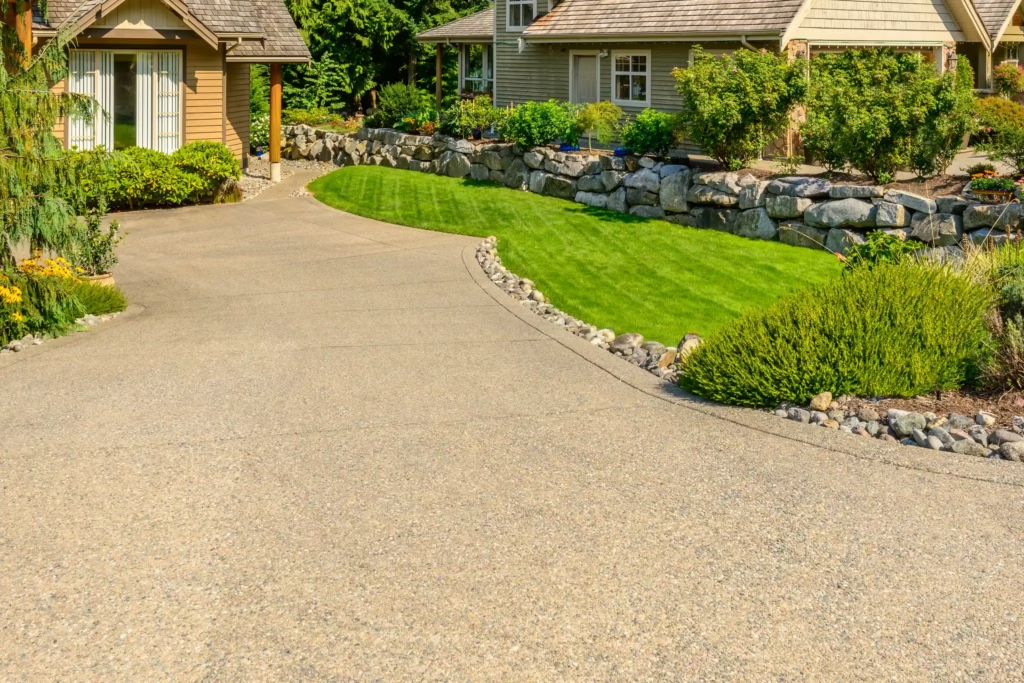
When it comes to home improvements, few upgrades punch as high above their weight as a new driveway installation. Research shows that homes with strong curb appeal sell for up to 7% more than comparable houses with less attractive exteriors. In dollar terms, adding a well-designed paved driveway can boost your home’s value by $5,000-$20,000 on average.
When you invest in a driveway installation, you’re not just adding a place to park. You’re improving your home’s first impression, convenience, and long-term value. A well-built driveway shows that your home is cared for and attractive. But if you cut corners on planning or materials, you could face issues later like water pooling, uneven surfaces, and expensive repairs.
In this article, we’ll walk you through everything you need to know, from costs, materials, and process to maintenance. So you can move ahead with confidence and make an investment that really counts.
Table of Contents
- Transform Your Home with Professional New Driveway Installation
- Why a Professional New Driveway Installation Is Worth It
- New Driveway Cost Comparison
- Return on Investment (ROI) for Homeowners
- Signs You Need a New Driveway Sooner Than You Think
- Why Hiring a Driveway Expert Saves You Money Long-Term
- How to Choose the Right Material for Your New Driveway Installation
- The New Driveway Installation Process: Step-by-Step
- Common Issues With New Driveway Installations & How to Avoid Them
- Get a Free Driveway Consultation in New Jersey
-
FAQs
Why a Professional New Driveway Installation Is Worth It
Let’s start with the “why.” Why does it matter that you go professional instead of doing it yourself or hiring a low-cost handyman? Here are some of the benefits:
- Curb appeal: The driveway is one of the first features visitors or buyers see. Choosing high-quality asphalt driveway options for new homes ensures your property makes a great first impression.
- Home value uplift: According to recent data, installing or upgrading a driveway can add between US $5,000 and $20,000 to a home’s market value and improve curb appeal by about 5–10 %.
- Durability and fewer issues: When you hire professionals, you’re more likely to get proper base preparation, correct drainage, and the right thickness, so there are fewer cracks, settlement, or water pooling later.
- Peace of mind: A trusted residential paving company will help homeowners create driveways that look great and hold up for decades.
If you consider this as an investment rather than just a “nice upgrade,” it shifts how you choose materials, contractors, and design. A professional approach ensures the long-term benefits.
New Driveway Cost Comparison
Driveway pricing in New Jersey, and throughout the Tri-State area, can be different from national averages due to higher labor costs, permitting rules, accessibility, and material delivery. Below is a clear look at what homeowners in the area typically spend based on recent statewide cost data.
Material | Typical Cost Range (NJ) | What to Expect |
Concrete Driveway Installation | $4.44 – $8.87 per sq. ft. | Durable, clean appearance, low maintenance |
Asphalt Driveway Installation | $3.17 – $5.32 per sq. ft. | More affordable upfront, requires resealing |
Concrete Pavers / Block | $11.80 – $15.12 per sq. ft. | High curb appeal, many color and layout options |
Brick Driveway (Dry-Set) | $12.67 – $22.81 per sq. ft. | Premium look and strong long-term durability |
Loose Gravel / Crushed Stone | $1.54 – $2.05 per sq. ft. | Lowest cost option, but needs more upkeep |
Pricing reflects statewide averages in New Jersey for residential driveway projects. Exact costs vary based on driveway size, slope, sub-base condition, drainage needs, and optional upgrades such as edging or lighting.
Return on Investment (ROI) for Homeowners
Recent research shows that investing in a quality driveway installation often pays off. According to Angi, a new concrete driveway can yield a return on investment (ROI) of approximately 50 % to 80 %, which means if you spend $10,000, you might expect a $5,000-$8,000 increase in home value.
Another source from Signature Paving Services notes that depending on the market, a new, well-installed driveway could add $10,000 to $20,000 to a home’s resale value.
It’s important to remember that these numbers vary widely by region. If every home in your neighborhood already has a high-quality driveway, your value uplift might be smaller. Conversely, if yours is one of the few upgraded ones, you might see a greater bump.
Smart driveway planning during home renovation can also help maximize your budget and ensure you choose materials that strengthen long-term home value.
Signs You Need a New Driveway Sooner Than You Think
Many homeowners wait too long before replacing their driveway, and by then, the damage has already spread to the base underneath. Here are the most common driveway replacement signs:
- Deep cracks wider than a quarter-inch.
- Sinkholes or uneven areas creating trip hazards.
- Water pooling after rain is due to driveway drainage problems.
- Crumbling or loose edges.
- Potholes that keep coming back after repairs.
- Fading or surface damage that hurts curb appeal.
If you notice two or more of these issues, you’re likely wasting money on temporary fixes. A new driveway installation solves the root cause, prevents structural damage, and keeps your property looking well-maintained.
Why Hiring a Driveway Expert Saves You Money Long-Term
It may seem cheaper to handle a driveway project yourself or hire a low-cost handyman, but problems usually show up later, and those repairs can cost far more than doing it right from the start.
A professional driveway contractor knows how to build a strong foundation, use the right materials, and ensure proper drainage so you don’t end up with sinking spots, cracking concrete, or ongoing asphalt repairs that drain your budget over time.
A driveway expert also helps you make smart decisions based on your budget and your home’s needs. That means fewer surprises, fewer repairs, and a driveway that stays smooth and safe for many years. You’re not just paying for a new driveway; you’re paying for peace of mind, quality craftsmanship, and long-term value.
How to Choose the Right Material for Your New Driveway Installation
Let’s look at the most common driveway materials and how they compare. Different options affect cost, longevity, and curb appeal, and understanding those differences helps you make a smart choice for your home.
Common Driveway Materials and their Pros and Cons
- Asphalt: A popular choice for New Jersey homes thanks to good durability, a clean look, and strong performance through seasonal weather changes. It’s budget-friendly upfront and can be refreshed with seal coating over time.
- Concrete: Durable and long-lasting but typically more expensive. Can crack in freeze-thaw climates if the base isn’t well prepared.
- Pavers / Block paving: High curb appeal with customizable designs. However, this is one of the most expensive options and requires experienced installers.
- Gravel: The lowest cost option, easy to install, and works well for long driveways or rural properties. More maintenance is needed to keep it tidy.
- Permeable choices: Good for drainage and eco-friendly goals, but usually higher in price and may require trained specialists.
Some materials listed above are included for comparison purposes. We specialize in asphalt paving, seal coating, and maintenance for residential and commercial properties in New Jersey.
Matching Material to Home Style & Usage
Think about these questions when you choose material:
- How many vehicles will use the driveway, and how heavy are they? (e.g., heavy trucks demand a stronger base).
- What is the style of your home? A modern-style home may suit smooth concrete or sleek pavers; a traditional home may suit stone or stamped concrete.
- What is the climate like in New Jersey? With seasonal weather changes, heavy rain, winter freeze-thaw cycles, and summer heat, you’ll want proper drainage, strong base preparation, and materials that resist cracking.
- What is your budget and maintenance tolerance? If you want to “install once and forget,” go for a strong base and lower-maintenance materials. If you’re okay with doing maintenance (resealing, sweeping), you can opt for slightly lower-cost material.
- How many vehicles will use the driveway, and how heavy are they? (e.g., heavy trucks demand a stronger base).
Maintenance & Lifespan of Materials
Taking good care of your driveway means you’ll get many years of reliable use out of it. Below are realistic life spans for popular driveway materials, assuming proper installation and maintenance, plus the routine tasks that keep them looking great.
A solid concrete driveway, when poured and finished well, has the potential to last about 25 to 50 years or more. Asphalt driveways, while more affordable upfront, typically last around 15 to 30 years before a major overhaul is needed.
To extend its life, simple care like sealing and repairing small cracks early can make a big difference, and affordable asphalt maintenance services can help you stay ahead of bigger, more expensive problems.
For paver driveways (brick or concrete), you can expect a long life of 25 to 50 years or even longer, because damaged sections can be easily replaced and the whole surface can hold up well over time.
The New Driveway Installation Process: Step-by-Step
A driveway may look simple from the surface, but a lot of planning and skill goes into building one that stays strong, smooth, and safe for years. Every successful new driveway installation follows a clear process, from preparing the ground below to the final touches that boost your home’s curb appeal.
Step 1. Site Visit & Planning
It all starts with a quick visit to your home. The contractor will take measurements, check the slope and soil, look at drainage needs, and evaluate your current driveway if you have one. You’ll also talk about design, the width, layout, and type of material you want.
Pro tip: Ask your contractor to show markings, sketches, or photos of the plan. It helps ensure you both see the same vision.
Step 2. Design, Details & Permits
Once the layout is set, the contractor will finalize the design:
- material type (concrete, asphalt, pavers, etc.).
- thickness or strength level.
- borders or edging.
- proper slope so rainwater drains away from the house.
If local rules require permits, they’ll handle those too. This ensures the new driveway installation follows city or county standards.
Step 3. Excavation & Sub-Base Preparation
This is where the real work begins, and it’s one of the most important parts of the entire project. The crew will remove the old driveway (if needed), dig down to the right depth, and build a strong stone base that will support your vehicle for years. A good base prevents sinking, cracks, and puddles later on.
Pro tip: A cross-section diagram of the base and layers is a great visual to ask for; it shows the quality you’re paying for.
Step 4. Edging & Reinforcement
To keep the driveway strong at the edges, your contractor may install concrete curbing or edge restraints, especially for pavers. Concrete driveways often use rebar or wire mesh for strength, especially if heavy vehicles will be parked on them.
Step 5. Laying the Surface
Now the driveway starts to look like a driveway! Depending on your choice:
- Concrete is poured, shaped, and smoothed
- Asphalt is rolled out and compacted
- Pavers are laid piece by piece, then locked in place with sand
This part requires skill and experience to make sure the slope is correct, the finish looks clean, and water drains properly.
Step 6. Finishing Touches & Sealing
Once the surface is installed, the crew will clean up, add joint sand for pavers, or apply sealing when needed.
Example: Labor can make up about half the total cost of a concrete driveway installation.
Pro tip: Ask when you can walk or park on it. Concrete curing usually takes several days depending on the weather.
Step 7. Final Walkthrough & Care Guide
A trustworthy contractor will show you the finished work, note any warranty details, and explain simple care instructions to protect your investment. They’ll also let you know exactly when it’s safe to use the driveway, usually 5–7 days for concrete depending on climate.
Common Issues With New Driveway Installations & How to Avoid Them
Even a beautiful new driveway can face problems if the work wasn’t done correctly. The good news? Many new driveway installation mistakes happen when the sub-base, drainage, or materials are not handled properly, and those issues often surface months later when repairs become expensive.
Here are the most common problems homeowners run into and how a professional can help you avoid them.
Water Pooling & Drainage Problems
If rainwater sits on the driveway instead of running off, it can seep into the base and weaken the surface over time. Standing water can also lead to cracks and algae buildup.
How to prevent it:
- Build the driveway with the correct slope (usually 1–2%).
- Add proper drainage channels if needed.
- Choose permeable materials when appropriate.
Cracking, Sinking, or Uneven Surfaces
One of the biggest causes of future driveway repair is poor base preparation. If the soil isn’t compacted or the stone base is too thin, the driveway can shift or crack under the weight of vehicles.
How to prevent it:
- Excavate to the right depth.
- Use a strong, compacted gravel base.
- Add reinforcement like rebar or mesh for concrete driveways.
Weeds Between Pavers or Along Edges
Paver driveways look great, but without proper joint sanding and sealing, weeds can start growing in the gaps and create shifting or uneven sections.
How to prevent it:
- Apply polymeric joint sand.
- Seal pavers to reduce moisture.
- Maintain edges with proper restraints.
Stains & Surface Discoloration
Oil leaks, tire marks, and heavy sun exposure can cause surface stains that affect curb appeal.
How to prevent it:
- Apply sealers on concrete or asphalt.
- Clean up spills right away.
- Choose darker or textured finishes if stains are a frequent worry.
Poor Workmanship or Low-Quality Materials
Some contractors rush through driveway installations or cut corners, especially on what’s “underneath,” where homeowners can’t see the difference until problems appear later.
How to prevent it:
- Choose a licensed, insured contractor with strong reviews.
- Ask for photos of recent driveway projects.
- Request details about base depth, materials, and warranties.
Get a Free Driveway Consultation in New Jersey
If you’re ready to upgrade your driveway, the best way to start is by speaking with a driveway expert who understands your home and your goals. Charlie’s Paving Inc. offers free on-site consultations for homeowners in New Jersey and the Tri-State area.
Our team handles everything from residential paving projects to commercial paving work for businesses that need durable surfaces built to handle heavier traffic. During this visit, we’ll review your driveway’s current condition, recommend the best materials for your property and budget, explain the full installation process, and provide a clear estimate with no pressure or hidden surprises.
Ready to transform your home? Contact Charlie’s Paving Inc. today to schedule your free driveway consultation.
Frequently Asked Questions
How much does a 1,000 sq ft driveway cost?
The typical cost for paving a driveway in the U.S. ranges from about $3 to $15 per square foot, depending on the material, labor, and site conditions. For a driveway around 600–1,000 sq ft, that means you could pay $1,800 to $15,000 or more.
Does a new driveway increase house value?
Yes, installing a new driveway can add around 5–10 % to your home’s value. If parking is limited in your area, or you’ve created extra spaces without harming the front yard, you might see an even bigger boost.
What is the cheapest option for a driveway?
Gravel is the most budget-friendly material. It’s easy to install and works well in rural or traditional settings. However, while the upfront cost is low, be aware it may require more maintenance over time.
What is the lifespan of a paved driveway?
Most asphalt driveways will last between 15 and 25 years, assuming they were installed correctly and receive proper maintenance.
Is a concrete driveway worth the money?
Yes, concrete is solid, durable, and low maintenance. Its strength and long lifespan make it a good value for larger driveway areas.