
Ultimate Guide to Driveway Planning During Home Renovation
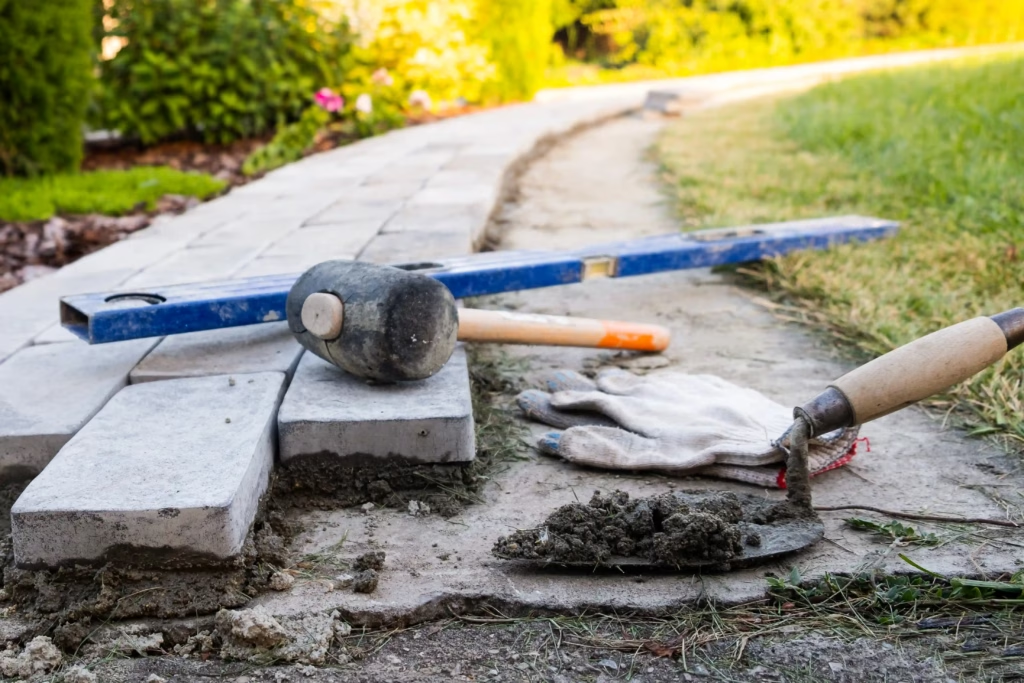
Do you need to rebuild or redesign a driveway during a home renovation or teardown? In many projects, the answer is yes. Driveway planning during home renovation is important because it affects curb appeal, home value, parking layout, and how your property connects to the street.
Whether the existing driveway stays, gets repaired, or is completely replaced depends on its condition, the design of your new home, and local building rules. If you want a different shape, such as a wider entrance or a half-circle driveway, you will likely need to check with your town or city for permits and approval.
Planning your driveway early helps avoid construction delays, surprise costs, and design limitations. When the driveway is part of the renovation plan from the beginning, everything works together, including the garage, drainage, landscaping, and walkways. The result is a smooth renovation process and a finished home exterior that feels complete and looks amazing.
- Ultimate Guide to Driveway Planning During Home Renovation
- Why Driveway Planning During Home Renovation Is Important
- Start With Your Renovation Scope and Site Conditions
- Choosing the Right Driveway Material for Your Home
- Designing Your Driveway Layout and Specifications
- Planning for Safety, Comfort, and Future Needs
- Step-by-Step Installation Process for Home Renovation
- Budgeting & Hidden Costs to Watch
- Maintenance and Longevity
- Avoiding Common Mistakes and Pitfalls
- Complete Your Renovation With the Right Driveway
Why Driveway Planning During Home Renovation is Important
When you’re renovating a home, every detail matters. But the driveway is often treated as a “last-minute” problem, which leads to unexpected costs, construction delays, and results that don’t match your home’s new design.
A driveway influences:
- Curb appeal and first impression.
- Property value when selling.
- Parking comfort and traffic flow.
- Long-term maintenance needs.
- Safety and water drainage around the home.
Think of your driveway like you think of your kitchen design: planned early, coordinated with everything else, and built to last.
Start With Your Renovation Scope and Site Conditions
Your property layout plays a big role in what your driveway can become. Before choosing materials or scheduling installation, consider:
- Slope and drainage needs.
- Soil condition and stability.
- Removal of old pavement if needed.
- Access for construction vehicles
- Garage positioning or upgrades.
- Landscaping designs around the driveway.
Driveway installation should be placed in the renovation schedule carefully. Most homeowners in New Jersey complete exterior home updates first, then the new driveway, and finally the surrounding landscaping.
Choosing the Right Driveway Material for Your Home
In New Jersey, asphalt is the most popular and practical material for residential driveways because it handles freeze-thaw cycles very well and offers a clean, finished look. Here’s what to consider:
Asphalt
Great for many New York homes because of its flexibility in freeze-thaw cycles. Heats up faster in winter, which helps snow melt. Requires resealing every few years but has a lower upfront cost.
Benefits of asphalt driveways:
- Strong performance in cold winters and hot summers.
- Smooth driving surface with a clean black finish.
- Faster installation and curing time.
- More affordable than concrete and stone.
- Easy repairs and resealing for a longer life.
Concrete
Smooth finish, modern look, long lifespan. Can be colored, textured, or paired with concrete pavers for a more premium style. However, cold climates can increase the risk of cracking if concrete isn’t properly installed with expansion joints.
Pavers / Brick / Stone
Smooth finish, modern look, long lifespan. Can be colored, textured, or paired with concrete pavers for a more premium style. However, cold climates can increase the risk of cracking if concrete isn’t properly installed with expansion joints.
Gravel/Permeable Options
Affordable and great for rural areas. Helps water soak into the ground, ideal when drainage is a concern. However, it is less formal and may require raking or replenishment.
Your driveway should match the look of your home. A traditional colonial house looks great with paver borders and smooth, curved designs. Modern homes usually pair well with clean concrete or slate-style pavers for a sleek and stylish finish. Your choice should also fit your lifestyle, whether you have multiple cars, a heavy-duty vehicle, or landscaping that needs strong, clean edges.
To support your long-term needs, Charlie’s Paving Inc. in New Jersey offers complete asphalt solutions, including sealcoating to protect your driveway, line striping for a clean parking layout, and resurfacing services to refresh an existing driveway without a full replacement.
Style and function work best when they come together as part of a well-planned renovation.
Designing Your Driveway Layout and Specifications
Driveway planning during home renovation is about designing a layout that improves daily living. Consider:
- Width and Length: Will you need space for guest parking? Can multiple cars pass comfortably?
- Shape: Straight drives fit tighter lots; curved drives soften the look and improve street views.
- Drainage Direction: Water must move away from the home; poorly planned grading creates foundation issues.
- Edging and Transitions: Tie the driveway into walkways, the garage entrance, and landscape borders so the upgrade looks intentional.
- Local Codes and HOA Guidelines: Long Island towns have rules for property lines, apron width, and curb cuts; permits may be required.
Even the smallest design decision impacts durability and appearance for decades.
Planning for Safety, Comfort, and Future Needs
Driveway planning during home renovation should also focus on how you’ll use the space every day. Small design upgrades make a big difference in safety and convenience for New Jersey homeowners. Consider adding:
- Proper lighting for nighttime parking and visibility from the street
- Clear sightlines near the road to prevent blind spots when backing out
- Smooth transitions to avoid any bumps at the garage entry or sidewalks.
- Snow-friendly layouts for straight edges and gentle slopes help with winter clearing.
- Accessibility for everyone (wheelchairs, strollers, mobility needs).
- Future vehicle planning, like EV charging space or wider parking for larger SUVs.
- Sustainable options such as recycled asphalt or permeable edges for better drainage.
By planning ahead with comfort and safety in mind, you get a driveway that’s not only attractive but also practical for daily use.
Step-by-Step Installation Process for Home Renovation
A high-quality driveway is never rushed. Here’s what happens from start to finish when installing a new driveway:
1. Site Preparation
Old materials are removed, the ground is cleared, and the surface is graded for smooth water flow. A solid ground start prevents expensive issues later.
2. Sub-base Foundation
A compacted stone layer supports the weight of vehicles while resisting frost movement. Many driveway failures happen because this step wasn’t done properly.
3. Material Installation
Depending on your chosen material:
- Asphalt is heated and rolled into a smooth, flexible surface.
- Concrete is poured, smoothed, and must cure fully before driving.
- Pavers are arranged in your chosen pattern, then sand is added to lock joints.
4. Finishing and Sealing
Edges are trimmed, surfaces cleaned, and sealants applied when needed. Lighting and landscaping can now be added without risk of damage.
No matter the material you choose, whether concrete for a sleek and modern look, cobblestone for a classic design, or crushed stone for a more budget-friendly and rustic finish, the success of your driveway depends on the quality of the installation process.
When every layer is prepared and protected correctly, your driveway will look great, perform well through every season, and remain a strong part of your home renovation for many years.
Budgeting & Hidden Costs to Watch
Here’s what you’ll want in your budget:
- Base cost by material (single-car vs double-car).
- Site factors: removal of old driveway, slope correction, inaccessible areas add cost.
- Decorative features: border stone, lighting, smart features.
- Scheduling costs: if other trades delay your driveway, you may need temporary parking, or alternate access.
- Weather and downtime: rain or snow can cause delays (especially important in Long Island seasons).
According to an April 2025 guide by Angi, the average cost for a concrete driveway runs between $2,700 and $14,500, with a typical spend around $6,400; size, finish level, and existing conditions drive major cost swings.
Another 2025 analysis from AsphaltCalculators.org found that professionally installed asphalt driveways typically cost $6 to $9 per square foot, translating to roughly $3,600-$5,400 for a 600 sq ft double-car driveway, but site prep and base work can add significant cost.
What this means for your budget:
- If you’re simply overlaying an existing driveway, you might aim for the lower end of material cost.
- If the old driveway must be removed, slopes corrected, and the site re-graded, you should expect 20-30% extra on top of base estimates.
- Decorative features (stone border, lighting, smart tech) often add $5-$10 per square foot or more depending on design complexity.
- For New Jersey homes, factor in weather downtime (snow, ice, freezing ground), and check your schedule for trades to avoid add-on costs for temporary parking or alternate access.
By building in these cost elements from the start, you can avoid surprise line items and stay aligned with your renovation budget.
Maintenance and Longevity
A newly installed asphalt driveway in New Jersey can last 15 to 25 years with routine maintenance such as:
- Sealcoating every 2 to 3 years.
- Immediate crack repairs to prevent spreading.
- Avoid sharp turns while the driveway is new.
- Proper snow removal practices in winter.
Maintenance keeps your driveway looking great and prevents bigger repairs later on, especially with affordable asphalt maintenance options like regular sealcoating and timely crack repairs.
Avoiding Common Mistakes and Pitfalls
Many homeowners run into problems with their driveway because of a few common mistakes that can easily be avoided. One of the biggest issues is ignoring drainage, which can cause puddles, cracks, or water pooling near the foundation.
Some people also rush the project and install the driveway too early in their renovation, only to have heavy equipment and construction traffic damage the new surface. Choosing the cheapest contractor without checking experience or reviews can lead to weak base work that does not last.
Others skip maintenance like sealcoating and small crack repairs, which later turn into expensive fixes. By planning ahead and working with skilled paving professionals, homeowners can prevent these problems and enjoy a driveway that stays strong and looks great for many years.
Complete Your Renovation With the Right Driveway
Since your home renovation is already in progress, now is the right time to finalize your driveway design. A well-planned driveway will improve curb appeal, protect against drainage issues, and make everyday parking and access safer and more convenient. Choosing durable materials and skilled installation ensures the driveway will look great and last for years.
If you’re renovating a home in New Jersey, Charlie’s Paving Inc. can help complete your exterior upgrade with a properly built and attractive driveway. Contact us today to schedule a free estimate and keep your renovation moving forward smoothly.